Saturday, March 27, 2010

Equipment

I've been asked 3 times in the last 2 days what camera and lens I would recommend so I thought I would address it here. I'll be honest, we are super busy right now so this will be brief, AND, I may not be back for a while, AND, Gary buys all of our equipment so he would be the better person to ask...

Our Camera Equipment:
Canon 40D (Mine which I love because of the frames per second which is greater than Gary's and the large view screen)
Canon 5D (Gary's which he loves because it has a full frame sensor and it has a great auto focus)
Canon 24-70mm f/2.8 L series lens (wide angle..Gary and I both love this one as it is very versatile. It can be used in ANY situation)
Canon 50mm f/1.4 lens (prime lens...the lens I use most with my kids around the house. Great shots, small and light, affordable)
Canon 70-200mm f/2.8 L series lens (telephoto lens...I love the way the shots look but I find it a little impractical, large and heavy, Gary loves it and uses it a lot).
And then a few other `back up' lenses:)

So, what would I recommend for you?
Well, it totally depends on what you want to use it for and what you are willing to spend. It seems like most people are looking for a good camera for their every day lives. So, I only know Canon's so I will just give you my opinion. Again, just my opinion. Say you are willing to spend $500.00, this is what I would say to do:

1. BODY
Buy a used Canon 20D from someone you know/trust who has a gently used one. People are upgrading quickly so often they are not used for very long. You can get one off of craigslist for less than $300.00. Obviously if you are going this route, you need to know what questions to ask but I will say that we have bought the majority of our camera and lenses second hand and have never had a problem whatsoever.

2. LENSES
Okay, so again, this is if you only have $500.00 to spend and you've already spent $300.00 on the body. What would I recommend? Hmmm...I'd say that the two most useful lenses are our 50mm prime lens and the 24-70mm wide angle. So, you can get a cheaper prime lens, maybe a 50mm f/1.8. You could also get a third party lens like our Tamron 17-55mm lens. Not as good, but does the trick.

If you are wanting to get a good lens, and able to spend a little more, we really, really love the three that I listed at the top. The 70-200mm is difficult to use in tight spaces so it is the least practical (I think, Gary might disagree). It's good for wedding ceremonies, sports, or outdoor photography. A good lens makes such a huge difference.

So I know this was brief and not super informative but that's all I've got. I would highly recommend getting a nice camera and then, learning how to use it:)

Do you have a favourite lens (whether you own it or not)?

Monday, March 15, 2010

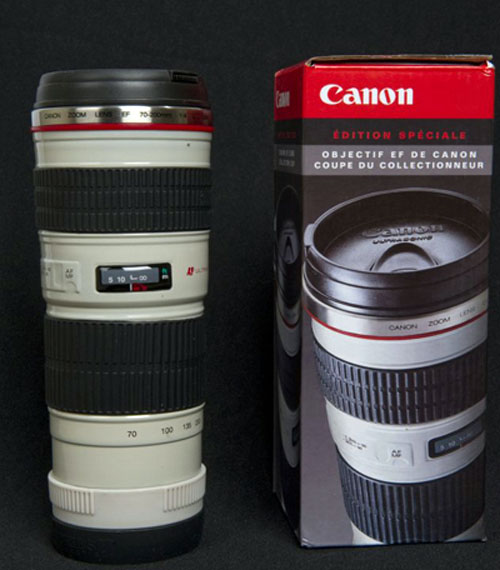
70-200mm Travel Mug

Check this out, an L-series 70-200mm travel mug! Gary said he found one on craigslist.....for $90. I'd rather put that money towards a real lens. Cool idea though. They were handing these out in the media center during the Olympics.

Monday, February 22, 2010

White Balance

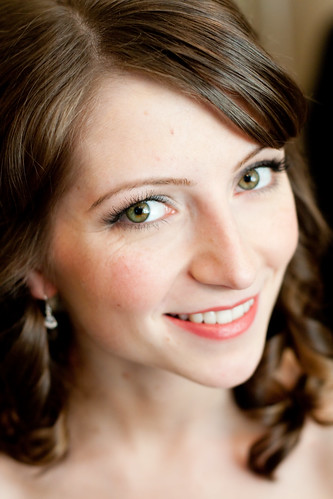
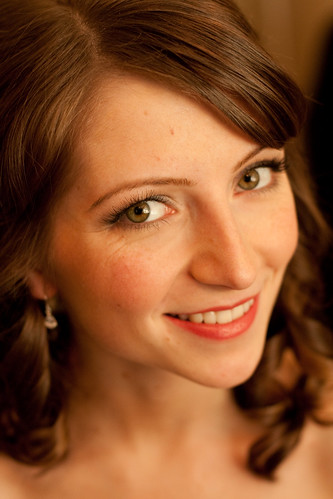
White balance is the way your camera reads light temperature and colour. Most people just often leave it on AWB (automatic white balance) but you can (and should!) change it indoors, with flash etc. You know when your indoor pictures of people have that yellow/orange tinge? That is why. If you look on your camera for the white balance settings they have cloudy, flash, fluorescent lighting, custom, etc.
The picture above was shot in RAW so I could adjust the white balance in post production. LOVE IT. Shooting in RAW is the greatest change I ever made to my photography but I won't talk about that right now.
This picture is fine but you can see that it was shot with an automatic white balance giving her face an orange/pink/yellow hue.
So find that white balance button on your camera and change it for the situation you find yourself in. See what kind of difference it can make....especially indoors.


Thursday, February 11, 2010

So You Have a DSLR, Now What?

So many people have told me that they have a nice camera but they don't really know how to use it. They just use the automatic settings and let it do all the work. Wouldn't it be fun if you knew how to use all of the buttons and dials?! Wouldn't it be fun if they flash didn't automatically pop up?

Gary would have different advice so I will do my advice today and then do a part II with his advice:)

There are 3 things that I think are very important to know.
1. ISO. This is equivalent to the old film that you used to put in your camera. Remember? You used 100 when you were shooting outside or where there was a lot of light. You used 800 when shooting in the dark. Same as ISO, you need to increase your ISO in darker situations. Yes, your picture will have more noise (look grainier) but you will actually see your subject.

2. Aperture. This is the amount of light that is let in. When people talk about f stops, that is what they are talking about. The smaller the number, the larger the aperture (more light let in). Our 50mm lens goes all the way to f/1.4 which is awesome. I usually shoot with a really high aperture and this also gives the look of the subject in focus and the background being blurry. If you want everything in focus, you will want a lower aperture (higher f stop).

3. Shutter speed. This is related to ISO and aperture. You generally want a fast shutter speed or your subject will be blurry. So, to increase you shutter speed, you need to probably crank your ISO up a bit and increase your aperture. You generally want a shutter speed of around 1/125th or faster.

So, take your camera out of auto mode and turn the dial to `AV' or aperture priority. Take pictures at various ISO's and apertures. Note the shutter speeds that you get. If the shutter speed is too slow (ex 1/40th), then increase your ISO or increase your aperture (make it a smaller number). Let me know how it goes!

Tuesday, January 26, 2010

Low Light

I've had several people ask me these questions in the last two days so here we go! What do you do when you are shooting inside your house at night? What about in a church for a wedding?

Here are some ways to get better shots when you do not have natural light:
1. External flash which can be bounced off the ceiling. Try not to use direct flash or a built in flash. If direct flash, dial it down. We have a Canon Speedlite 430EX and a 580EX.

2. Shoot on aperture priority and use the lowest f-stop (in layman's terms, the f-stop is how much light is let in and when you have a lower number, it's a higher aperture, letting in more light).

3. To go with #2...one of my favourite lenses is my 50mm f/1.4 (the 50mm f/1.8 is a much cheaper option that would work well but my husband would say to invest in the better lens).

4. Use a higher ISO and deal with the noise/grain in post production. There are programs out there that deal with noise and I can't recommend what is best. I just use the noise slider in Lightroom and it seems to work ok. I have heard good things about Noise Ninja and Noiseware. As mentioned in a previous post, you can get a free 30 day trial of Lightroom and see if it works for you.

5. Shoot in RAW and you can push the exposure up in post production (again, I do it in Lightroom). I don't think I would recommend shooting in RAW if you are starting out. We have just shot jpeg's for a long time and recently switched to RAW.

6. Use a tripod or monopod if shutter speed is not high enough. The Digital Photography School says that your shutter speed denominator should be larger than the focal length of your lens. So, for example, with my 50mm lens, a shutter speed of 1/60th should be adequate. Although, I always try to keep my shutter speed at about 1/125th or faster.

7. Practice, practice, practice:)

Hope there is something helpful in there. If you have any other questions, please ask. I'm not claiming to be an expert but I've def. learned a lot over the past few years.


Saturday, January 23, 2010

Lightroom

Just saw this on a photography forum...think it pertains really well to people's perceptions about `fancy equipment':

Buying a great violin does not make you a great violinist, just the owner of a great violin.

By the way, did you know that you can download free trials of Lightroom? I would highly recommend trying out one of their 30 days trials. That is what I use for almost all of our editing. One side note is that there is a beta version of Lightroom 3 to try out there, but, it DOES NOT have an activated luminance noise slider which is important to me when shooting in RAW. They will have it in the real version when it is released, just not yet.

Tuesday, December 29, 2009

Blue Sky

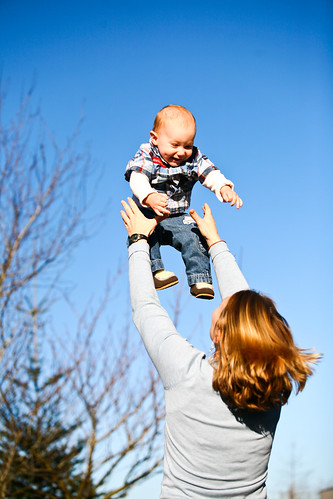
Just a quick one to keep these blog up:) The best way to get blue sky in your pictures is to have the sun behind your (the photographers) back. The only thing is people won't be looking at you because they will be squinting BUT great for candids.